
Tauranga sits on the edge of Te Awanui, one of New Zealand’s largest natural harbours, in the Bay of Plenty region. The waterfront centres on The Strand, a lively promenade lined with cafes and restaurants, and extends to Mount Maunganui’s beaches and the marina. You can walk or cycle along the harbour, explore heritage sites, or join a sailing or fishing charter.
The Strand
The Strand is Tauranga’s main waterfront promenade, running along the harbour edge in the city centre. The paved path stretches about 1.4 kilometres from Trinity Wharf and is lined with cafes, restaurants and bars that open onto outdoor terraces. You can walk, cycle or jog the length of the promenade with views across the water to Matakana Island.
The Hairy Maclary bronze sculptures are a popular attraction along The Strand. The collection features characters from New Zealand author Dame Lynley Dodd’s children’s books. The waterfront also has tidal steps that lead directly into the harbour, a modern playground with an eight-metre-tall waka tower structure, and grassy reserves for picnics.
Tauranga Harbour and Marina
Tauranga Harbour is a large tidal estuary covering around 200 square kilometres. The harbour entrance at Mount Maunganui serves the Port of Tauranga, New Zealand’s largest export port. You can arrange fishing charters, harbour cruises, kayaking trips and sailing tours from the marina and waterfront operators.
Tauranga Marina at Sulphur Point has berths for boats from eight to 24 metres, plus visitor facilities including toilets, showers and a cafe. The marina is about five minutes from central Tauranga and 10 minutes from Mount Maunganui. Tauranga Bridge Marina, located on the harbour causeway between the city and the Mount, offers similar facilities and services.
Mount Maunganui and Mauao
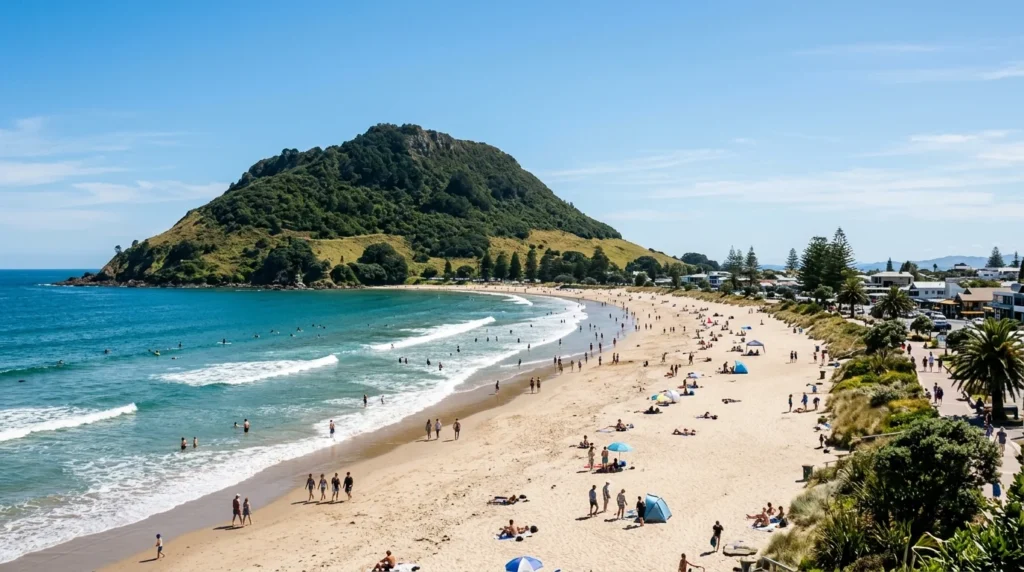
Mount Maunganui is a coastal settlement about 15 minutes from central Tauranga, connected by the harbour bridge. The area is known for its long surf beach and Mauao, the 232-metre volcanic cone that rises from the base of the peninsula. The Māori name Mauao means ‘caught by the dawn’.
Important note: Mauao, including all summit and base walking tracks, has been closed to the public since a landslide occurred in January 2026. Tauranga City Council has not confirmed a reopening date. Check current conditions before planning a visit.
When open, the base track around Mauao is a 3.4-kilometre loop that takes about 45 minutes. The summit tracks typically take around 40 minutes one way and require good fitness. The beaches at Mount Maunganui are popular for swimming, surfing and bodyboarding.
Heritage Sites
The Elms Mission Station, established in 1838, is one of the oldest heritage sites in the Bay of Plenty. The mission house and gardens are located on Mission Street, a short walk from The Strand. The site offers insight into early European settlement and Māori-European contact. Guided tours are available.
The Strand area itself has historical significance as a former trading and shipping hub. The waterfront has been redeveloped over recent years but retains some heritage buildings and public art installations that reference Tauranga’s maritime past.
Water Activities
The sheltered harbour waters make Tauranga suitable for kayaking and paddleboarding. Several operators offer guided kayaking trips on Tauranga Harbour and the Wairoa River. Some tours include night-time glow worm experiences on Lake McLaren.
Harbour cruises and sailing charters leave from the marina and waterfront. You can book half-day or full-day trips that may include swimming, fishing or dolphin watching. Diving and snorkelling excursions operate from local dive shops, with trips to coastal sites around the harbour entrance and offshore.
Fishing charters target species including snapper, kahawai and kingfish. Both recreational and deep-sea fishing options are available. Check with operators about what’s included and whether you need to bring your own gear.
Dining and Markets
The Strand has the highest concentration of waterfront dining in Tauranga. Options range from casual fish and chip shops to restaurants serving local seafood, New Zealand lamb and international cuisine. Many venues have outdoor seating with harbour views. The area is busiest during summer evenings and weekends.
The Tauranga Farmers Market operates on Sunday mornings along the waterfront. You can browse stalls selling fresh produce, artisan foods, baked goods and handmade crafts. The market includes live music and is a good place to sample local flavours and meet vendors.
Getting to Tauranga
Tauranga is about 200 kilometres southeast of Auckland. The drive takes around two and a half to three hours via State Highway 2 through the Waikato region. Tauranga Airport offers domestic flights from Auckland and Wellington. If flying internationally, you will arrive at Auckland Airport and then drive or take a bus to Tauranga.
InterCity operates regular bus services between Tauranga and other North Island cities. The bus terminal is located on Willow Street in the city centre, within walking distance of The Strand. Car hire is available at the airport and in town if you want to explore the wider Bay of Plenty region.
Parking is available at The Strand and around the waterfront, though it can be busy during peak times and summer weekends. Walking and cycling paths connect the city centre to Mount Maunganui and other coastal areas.
When to Visit
Summer, from December to February, is the warmest and busiest time in Tauranga. Temperatures are typically in the low to mid-20s Celsius, ideal for beach activities and harbour swimming. The waterfront and Mount Maunganui can be crowded during the Christmas and New Year holiday period.
Spring (September to November) and autumn (March to May) offer milder weather and fewer visitors. These seasons are suitable for walking, cycling and outdoor dining without the summer crowds. Winter is quieter and cooler but still mild compared to other parts of New Zealand.
Practical Information
The Tauranga i-SITE Visitor Centre is located at 1 Devonport Road and provides information about local attractions, accommodation and bookings. Opening hours are typically 9am to 5pm Monday to Saturday, but check ahead for public holidays and current hours.
Accommodation options near the waterfront range from hotels and motels to holiday parks and backpackers. Mount Maunganui has beachfront holiday parks at the base of Mauao. Book ahead during summer and school holidays.
Public toilets are available along The Strand, at the marina, and at Mount Maunganui beaches. Drinking water fountains are located on walking tracks and in public reserves.
FAQ
Can you swim at Tauranga waterfront?
Yes, you can swim from tidal steps and access points along The Strand, though the main swimming beaches are at Mount Maunganui. The harbour is generally calm and suitable for swimming at high tide. Always check local conditions and be aware of boat traffic near the marina and wharves.
Is there a ferry to Matakana Island?
Matakana Island lies across the harbour from Tauranga. Access is typically by private boat or water taxi. Check with local operators about current ferry services and schedules, as these can vary seasonally.
Are the waterfront walking paths suitable for wheelchairs?
The Strand waterfront promenade has paved, accessible pathways suitable for wheelchairs and mobility devices. Accessible toilets and facilities are available along the route. Some areas around the marina and heritage sites may have uneven surfaces or limited access. Contact Tauranga City Council for detailed accessibility information.
Sources
- Tourism New Zealand – Tauranga
- Tauranga City Council – Travel and Tourism
- Bay of Plenty Regional Council – Tauranga Harbour
- FreeWalks.nz – Mount Maunganui Track Status

Independent New Zealand travel guides from 0 Digital, Aotearoa New Zealand. Details change, so check with the operator or the official source before you go. Spotted something out of date? Tell us.
 Trip planning
 Trip planning
 Trip planning
