
A cruise extension is extra time you add before or after your cruise to explore New Zealand beyond the port stops. Instead of arriving and leaving the same day your ship docks, you stay a few days to visit national parks, try adventure activities, experience Māori culture or explore cities like Auckland, Wellington and Queenstown. The cruise season runs from October through April, with most sailings concentrated between December and February.
Entry Requirements for Cruise Passengers
If you arrive in New Zealand as a cruise ship passenger and do not have a visa, you must hold an NZeTA (New Zealand Electronic Travel Authority). Your NZeTA must be granted before you leave for New Zealand. When you check in to your cruise, you need to show evidence of your NZeTA or visa to check-in staff.
Travellers on cruise ships arriving by the maritime border are deemed under New Zealand immigration law to have a 28-day visa. All cruise travellers arriving in New Zealand need to complete a New Zealand Traveller Declaration which asks questions about your travel, including customs, immigration and biosecurity information.
You need a valid passport for the duration of your stay. Australian citizens and permanent residents do not need an NZeTA. For current requirements, check visa and entry requirements or visit Immigration New Zealand.
Main Cruise Ports
Cruise ships visit ports including Auckland, Wellington, Christchurch (Lyttelton), Dunedin (Port Chalmers), Napier, Tauranga, Picton, and scenic cruising through Milford Sound.
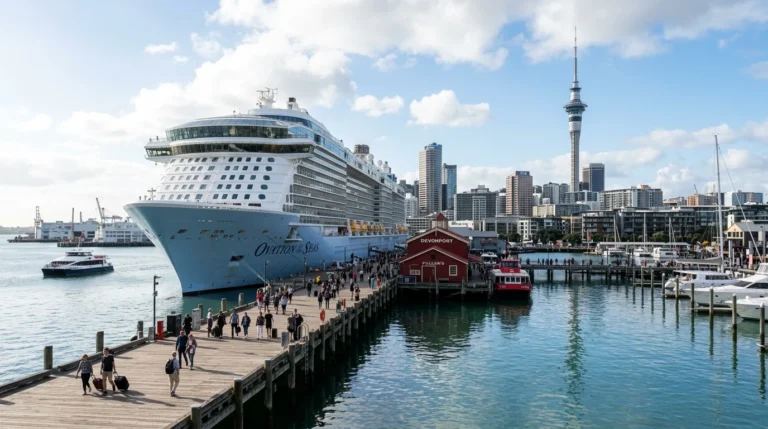
Auckland is New Zealand’s largest city. Ships dock in downtown and you can easily walk around the central business district. You can visit the Sky Tower, take a ferry to Waiheke Island for beaches and wineries, or explore the Auckland War Memorial Museum.
Wellington is the capital city. Passengers are not permitted to walk from the ship and have to take the free shuttle bus to the centre of the city. Key sights include Te Papa (the national museum), the Wellington Cable Car and the Wellington Botanic Garden.
In Christchurch, ships dock in the port of Lyttelton and you need to take the shuttle bus to get into town, as Lyttelton is about 8 kilometres from the city centre. The city is known for the Christchurch Botanic Gardens and the International Antarctic Centre.
At Bay of Islands, ships anchor out in the harbour and passengers are tendered into the wharf at Waitangi, then take the shuttle bus down the road to get to the town of Paihia. The region is known for sailing, dolphin watching and the Waitangi Treaty Grounds where the Treaty of Waitangi was signed in 1840.
What to Do on a Cruise Extension
Cities and Culture
Auckland offers museums, harbour walks, island day trips and city tours and sightseeing. Wellington has a strong arts scene, cafes, Te Papa museum and craft beer breweries. Christchurch features the Botanic Gardens, the Arts Centre and nearby Akaroa on Banks Peninsula.
Māori cultural experiences include visiting marae (meeting grounds), watching traditional performances with songs and dances, and enjoying a hāngi feast where food is cooked in an underground oven. Rotorua is a centre for Māori culture and also has active geothermal parks with bubbling mud pools and geysers.
National Parks and Hiking
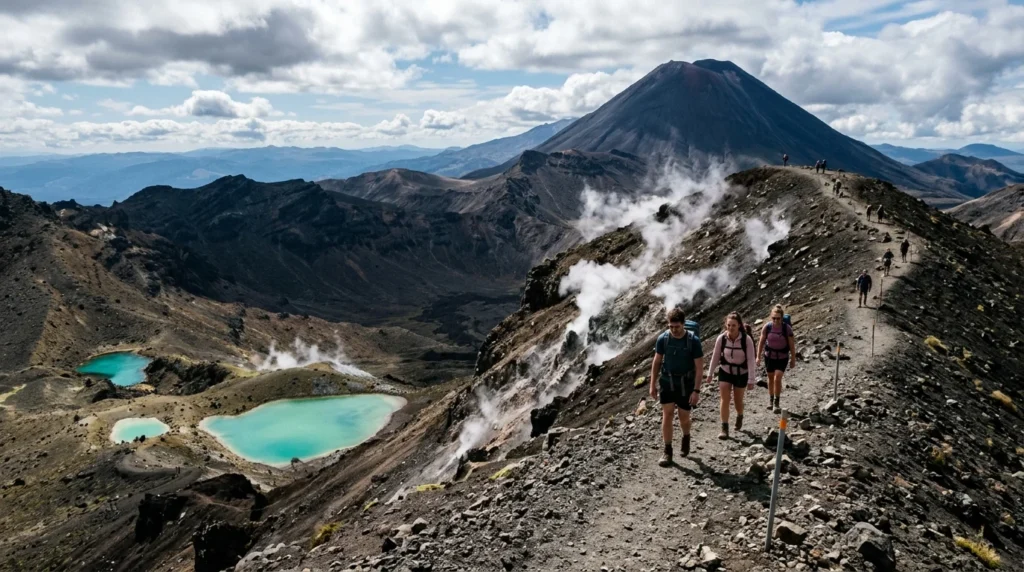
Tongariro National Park offers the Tongariro Alpine Crossing, a 19.4-kilometre day hike through volcanic landscapes past emerald lakes and craters. Abel Tasman National Park on the South Island has the Abel Tasman Coast Track with golden beaches and coastal forest. Both parks are managed by the Department of Conservation. Check the DOC website for current track conditions and any fees.
Aoraki/Mount Cook National Park has mountain scenery and walking tracks. Fiordland National Park includes Milford Sound and Doubtful Sound with waterfalls and steep valley walls. For more walking ideas, see our guide to volcano exploration walks.
Adventure Activities
Queenstown is known for adventure sports including bungy jumping, jet boating, skiing in winter and skydiving. You can take scenic flights, boat trips on Lake Wakatipu or visit nearby Gibbston Valley wineries. Kayaking is available in many locations including Milford Sound and Abel Tasman National Park. See activities and adventure listings for operators.
Kaikōura on the South Island is known for whale watching tours where you can see sperm whales, dolphins and seals. Stewart Island south of the South Island offers guided night walks to spot kiwi in the wild.
Food and Wine
Wine regions include Marlborough (known for Sauvignon Blanc), Hawke’s Bay and Gibbston Valley near Queenstown. Many vineyards offer tastings and tours. Local cuisine features fresh seafood, lamb and seasonal produce. For more options, browse food and wine experiences.
Planning Your Extension
New Zealand’s actual summer months are December, January and February, and most cruise itineraries occur during these months. The shoulder months of October, November and April offer quieter conditions with less packed ports and more room on shore tours.
For a two-day extension in one city, focus on Auckland or Wellington. A five-day extension lets you combine two destinations such as Auckland and Rotorua, or Wellington and Marlborough. A week-long extension can include Auckland, Rotorua and Queenstown, or a circuit of South Island locations.
Domestic flights connect main centres. Rental cars are available in cities and airports. Buses and trains operate between some centres. Check NZ Transport Agency Waka Kotahi for road conditions if driving.
Accommodation
Accommodation options range from hostels and holiday parks to mid-range hotels and luxury lodges. Book in advance during peak season from December to February. For listings, see places to stay. Eco-friendly options are covered in our guide to eco-friendly holiday parks.
What to Pack
New Zealand weather can change quickly. Pack layers including t-shirts, a warm jumper and a waterproof jacket. Bring comfortable walking shoes or hiking boots if you plan to do any tracks. Sun protection is important as UV levels can be high, even on cloudy days. Bring sunscreen, a hat and sunglasses. New Zealand uses Type I power sockets, so bring an adaptor if your devices use a different plug type. For seasonal advice, see packing tips for every season.
FAQ
When is the best time for a cruise extension?
Summer (December to February) has the warmest weather and longest days but is the busiest period with higher prices. Spring (October to November) and autumn (March to April) are quieter with mild weather and often lower accommodation rates.
Do I need travel insurance?
Travel insurance is not required but is recommended. It can cover medical costs, trip cancellations and lost luggage. New Zealand has an Accident Compensation Corporation scheme that covers some accident-related medical costs for visitors, but it does not cover illness or pre-existing conditions.
How much cash should I carry?
Credit and debit cards are widely accepted. You need to declare amounts of NZD $10,000 or more in cash or foreign equivalent when entering New Zealand. ATMs are available in all cities and most towns.
Sources
- Immigration New Zealand: New Zealand Electronic Travel Authority (NZeTA)
- Immigration New Zealand: Arriving by cruise or cargo ship
- New Zealand Customs Service: Cruise ship operators

Independent New Zealand travel guides from 0 Digital, Aotearoa New Zealand. Details change, so check with the operator or the official source before you go. Spotted something out of date? Tell us.
 Beaches and islands
 Beaches and islands
 Beaches and islands
