
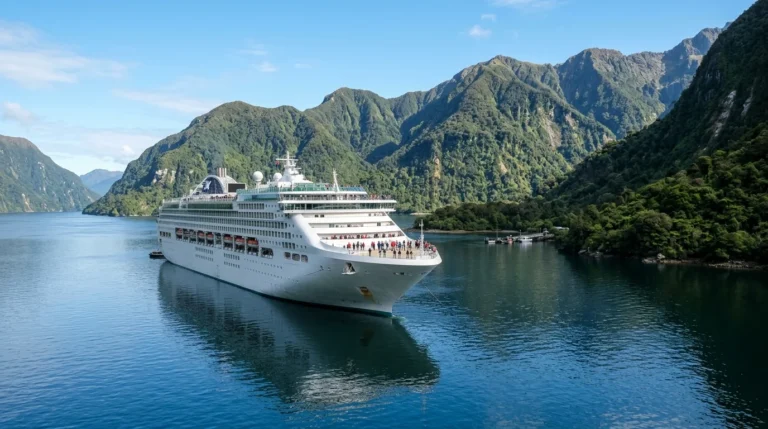
Large ocean cruises offer a comfortable way to see New Zealand’s coastline, fjords and islands. These ships carry hundreds to thousands of passengers and typically visit between six and ten ports during voyages that last from nine to fourteen nights. Most itineraries depart from Auckland or Australian cities including Sydney, Melbourne and Brisbane, operating during the southern hemisphere summer.
The Cruise Season
The New Zealand cruise season runs from October to April. Most sailings occur in December, January and February, when the country enjoys its warmest weather and long daylight hours.
The shoulder months of October, November and April offer quieter ports and less crowded shore excursions. Weather remains good during these months. Winter cruises from June to August are rare.
Summer temperatures range between 20 and 30 degrees Celsius. Pack layers as conditions can change quickly, particularly in Fiordland and on the South Island.
Major Ports
Auckland is the main hub for cruise ships in New Zealand. Ships berth at Queens Wharf or Princes Wharf right in the city centre, so you can step off and walk into town without needing a shuttle.
Other main cruise ports include the Bay of Islands, Tauranga, Napier, Wellington, Picton, Christchurch via Lyttelton or Akaroa, Dunedin via Port Chalmers, and Fiordland. Ships also call at smaller ports including Gisborne, Nelson and Timaru on some itineraries.
Bay of Islands and Akaroa typically require tendering from ship to shore, while Auckland, Tauranga, Napier, Wellington, Picton and Dunedin usually have alongside berths.
Wellington
The capital sits on a compact, walkable harbour. Te Papa, the national museum, is a short walk from where ships dock. The city offers galleries, cafes and access to nearby Wairarapa wine country.
Christchurch and Akaroa
Ships reach Christchurch through either Lyttelton or Akaroa. Lyttelton is the closer port to the city. Akaroa is a French-settled harbour town on Banks Peninsula with walking tracks and opportunities to see Hector’s dolphins.
Dunedin
Ships dock at Port Chalmers on Otago Harbour. Dunedin has Scottish heritage architecture and the nearby Otago Peninsula offers wildlife including albatross, fur seals and yellow-eyed penguins.

Fiordland and Milford Sound
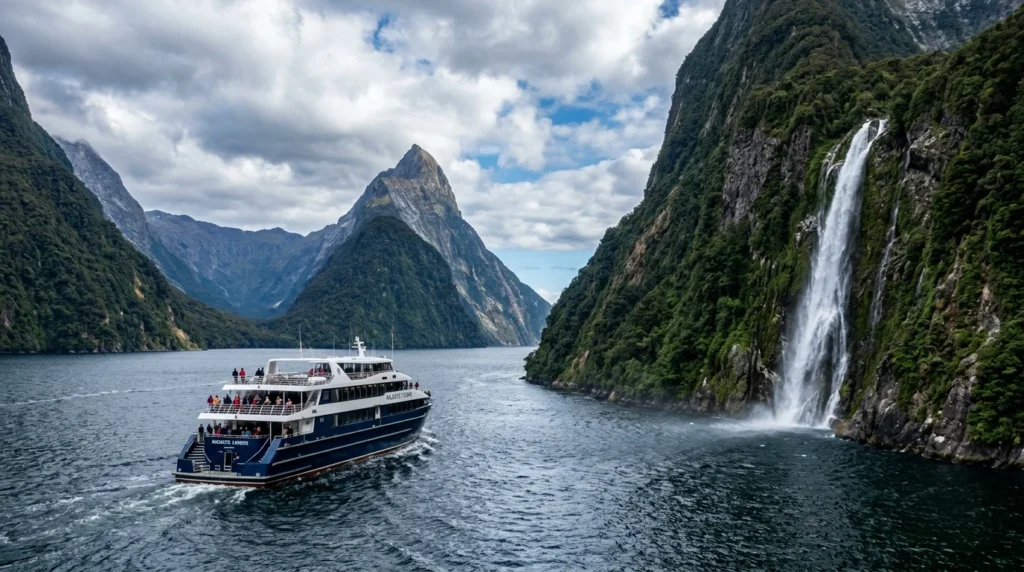
Fiordland is not a port. Ships cruise through Milford Sound, Doubtful Sound or Dusky Sound during daylight hours, sailing close to waterfalls and cliff faces. This is scenic cruising rather than a stop where passengers go ashore.
January and February offer long daylight hours and mild weather for cruising Fiordland. Rain is common year-round but enhances the waterfalls.
Cruise Lines Operating in New Zealand
Around thirty cruise ships visit New Zealand each season, operated by lines including Princess, Royal Caribbean, Celebrity, P&O Australia, Holland America and Carnival. Smaller luxury lines including Cunard, Seabourn and Scenic also offer New Zealand itineraries.
Each line offers different onboard experiences. Larger ships have multiple dining venues, pools, fitness centres, entertainment shows and activities. Smaller luxury vessels offer more intimate settings and upscale service.
Visa and Entry Requirements
New Zealand and Australian passport holders do not need a visa or NZeTA to visit New Zealand.
Passengers arriving by cruise ship need an NZeTA unless they already hold a valid New Zealand visa. Apply before your cruise departs and allow up to 72 hours for processing.
When you arrive, immigration deems you to hold a visitor visa for up to 28 days. This applies while you remain with the ship. If you fly into New Zealand to join a cruise, or plan to leave the ship and stay in the country, you need to check separate visa requirements.
Visit Immigration New Zealand to confirm your requirements and apply for an NZeTA.
Planning Shore Excursions
Research excursion options before you sail. Cruise lines offer organised tours at each port, but independent options may provide different experiences. Popular excursions fill quickly, so book early.
Shore activities vary by port. Options include wine tasting in Hawke’s Bay or Marlborough, geothermal areas near Tauranga in the Bay of Plenty, Māori cultural experiences, wildlife viewing on the Otago Peninsula, and walking tracks near most ports.
Allow buffer time to return to the ship. Ships will not wait if you are late back from an independent excursion.
What to Pack
Bring comfortable walking shoes, a rain jacket, warm layers and sun protection. Even in summer the weather can change. Include formal clothing if your cruise line has dress codes for evening dining.
Check biosecurity requirements before you travel. New Zealand has strict rules about bringing in outdoor gear, food and plant material. Ensure hiking boots and camping equipment are clean and declare all food items.
Getting to and from Your Cruise
If your cruise begins or ends in Auckland, the city has an international airport with connections throughout New Zealand and the Pacific. The city centre and cruise terminals are a short drive from the airport.
For cruises starting in Australia, you will cross the Tasman Sea before reaching New Zealand ports. This typically takes one or two sea days.
Consider arriving a day or two early to adjust to the time zone and reduce stress if flights are delayed. The same applies if you are flying home immediately after your cruise ends.
FAQ
Do I need travel insurance for a New Zealand cruise?
Yes. Arrange comprehensive travel insurance that covers medical expenses, trip cancellation and missed departures. New Zealand has no reciprocal health agreements with most countries, so you will pay the full cost of any medical treatment.
Can I explore ports independently or do I need to book cruise line excursions?
You can explore independently at most ports. Auckland and Wellington are particularly easy to walk around from where the ship docks. Some destinations like Milford Sound or Rotorua require organised transport. Independent excursions can offer better value but you are responsible for getting back to the ship on time.
What currency is used in New Zealand?
New Zealand uses the New Zealand dollar. Most places accept credit and debit cards. ATMs are available in all main ports.
Sources
- Tourism New Zealand: Cruises to New Zealand
- Immigration New Zealand: Before you travel to New Zealand
- Cruise Critic: The Best Time to Visit New Zealand on a Cruise

Independent New Zealand travel guides from 0 Digital, Aotearoa New Zealand. Details change, so check with the operator or the official source before you go. Spotted something out of date? Tell us.
 Beaches and islands
 Beaches and islands
 Beaches and islands
