
A cruise extension lets you spend extra time in New Zealand before or after your voyage. New Zealand’s cruise season runs from October through April, with main ports including Auckland, Bay of Islands, Tauranga, Napier, Wellington, Picton, Christchurch (via Lyttelton), Dunedin (via Port Chalmers) and scenic cruising through Fiordland. An extension allows you to visit destinations inland from the ports, experience Māori culture, see geothermal parks, or take on adventure activities.
When to Visit
Summer months of December through February offer the warmest weather with temperatures ranging from 16°C to 24°C and long, sunny days. This is peak season with higher accommodation costs and larger crowds. Spring (September to November) presents mild temperatures and fewer crowds, while autumn (March to May) is considered shoulder season with better value. Winter cruises to New Zealand are rare.
Auckland
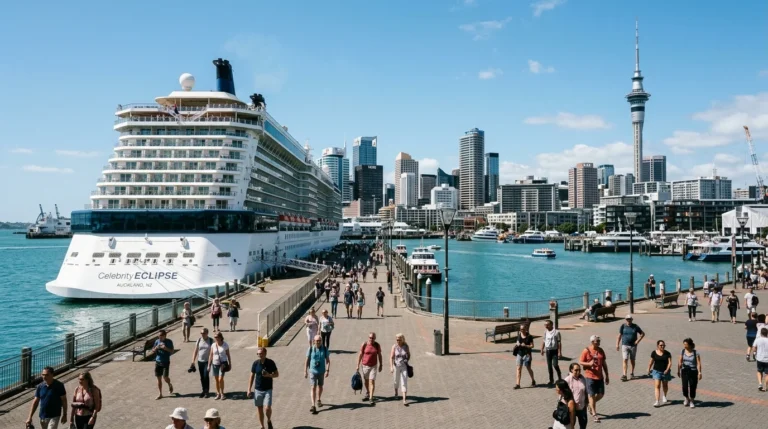
Auckland is the main hub for cruise ships to New Zealand. Ships berth at Queens Wharf or Princes Wharf right in the city centre, requiring no shuttle. The city offers harbour cruises, museums and access to Waiheke Island. You can reach Rotorua from Auckland in around three hours by road.
For more on what to see and do in the region, visit Auckland.
Bay of Islands
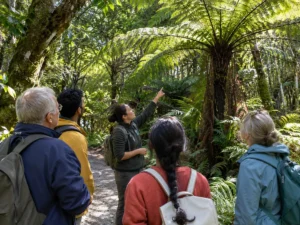
The Bay of Islands in Northland offers sheltered waters, historic sites and marine wildlife. The Waitangi Treaty Grounds preserve the location where the Treaty of Waitangi was signed in 1840. The historic town of Russell, once New Zealand’s first capital, sits across the bay. Dolphin watching, sailing and kayaking are popular activities. Bay of Islands is typically a tender port rather than a dock.
Rotorua
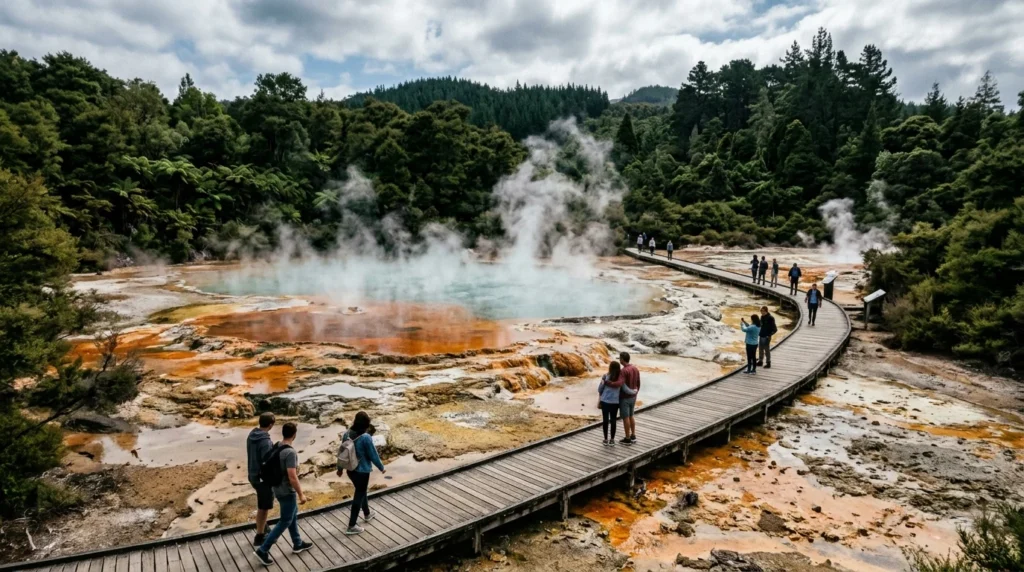
Rotorua in the central North Island is known for its geothermal activity, with Wai-O-Tapu and Te Puia among the most popular thermal parks, and Te Puia also combining geothermal features with Māori culture. Wai-O-Tapu Thermal Wonderland features vividly coloured pools and erupting geysers. Te Puia’s Pōhutu Geyser erupts up to 20 times a day, spurting hot water up to 30 metres. Te Puia also includes the New Zealand Māori Arts and Crafts Institute and a kiwi conservation centre.
Cruise passengers arriving at Tauranga in the Bay of Plenty can reach Rotorua in around an hour.
Wellington
Wellington is a compact, walkable harbour city and a strong port for independent exploration. Te Papa Tongarewa, the national museum, provides insights into New Zealand’s natural and cultural history. The cable car climbs to the Botanic Garden with views across the city and harbour. The waterfront area includes cafes, bars and the historic harbour precinct.
Find more information at Wellington.
Queenstown
Queenstown in Otago is not a cruise port but can be reached from Dunedin or as part of a wider South Island extension. The town offers bungy jumping, jet boating, skydiving and scenic flights. The Skyline Gondola provides views of Lake Wakatipu and the Remarkables mountain range. The nearby Gibbston Valley has wineries and cellar doors.
See our dedicated guide: Discover Queenstown and Milford.
Fiordland
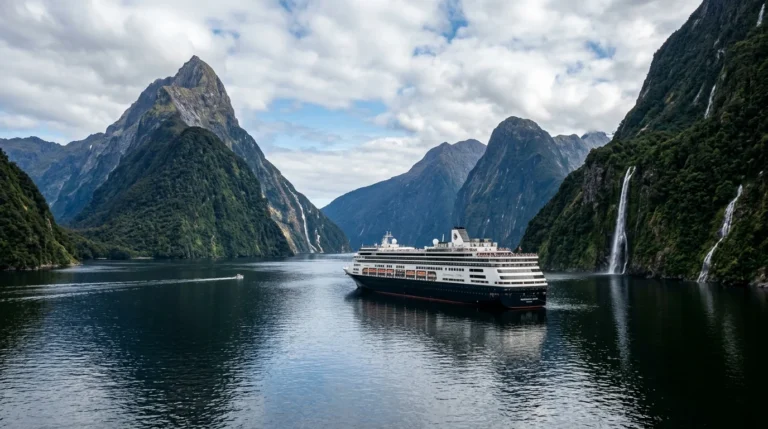
Fiordland National Park, located in the southwest corner of the South Island, is New Zealand’s largest national park at approximately 12,500 square kilometres and is administered by the Department of Conservation. The most-visited fiords are Milford Sound, Doubtful Sound and Dusky Sound. Large cruise ships sail through one or more fiords with passengers viewing the scenery from aboard.
You can extend your visit to Fiordland with a day trip or overnight cruise from Queenstown or Te Anau. More at Explore Fiordland.
Planning Your Extension
You can book extensions directly through your cruise line, with local tour operators, or independently. Pre-cruise extensions let you settle in before boarding, while post-cruise extensions give you time to explore before flying home.
New Zealand has public transport in major cities including buses and trains. Taxis and ride-sharing services operate at most ports. Renting a car gives you flexibility for exploring further.
Accommodation ranges from luxury lodges and hotels to mid-range motels and budget hostels. Book ahead during summer peak season.
Find options at Places to stay, Tours and sightseeing, and Transport and car hire.
Entry Requirements
Visa requirements depend on your nationality and length of stay. Many visitors can enter New Zealand without a visa for short visits, but you may need to obtain an NZeTA (New Zealand Electronic Travel Authority) before arrival. Check current requirements well before your departure.
See our guide: Essential Guide to New Zealand Visa and Entry Requirements.
FAQ
What is the ideal length for a cruise extension?
Three days lets you focus on one or two destinations near your port of call. Five to seven days allows you to visit multiple regions or combine a city with Rotorua or Queenstown. Your choice depends on your interests and available time.
Can I organise my own extension independently?
Yes. Many travellers book their own accommodation, transport and activities. This gives you flexibility to choose your pace and focus on what interests you. Cruise line packages offer convenience but independent planning can save money and provide more options.
What should I pack for varied activities?
Pack layers for changing weather conditions. Bring a waterproof jacket, comfortable walking shoes and sun protection. If visiting thermal areas, swimwear is useful. A small day pack helps carry essentials on excursions.
Sources
- Tourism New Zealand – Cruises to New Zealand
- Department of Conservation
- Tourism New Zealand – Rotorua Attractions

Independent New Zealand travel guides from 0 Digital, Aotearoa New Zealand. Details change, so check with the operator or the official source before you go. Spotted something out of date? Tell us.
 Beaches and islands
 Beaches and islands
 Beaches and islands
