
New Zealand’s cities offer galleries, museums and cultural centres that tell stories of Māori heritage, European settlement, natural history and contemporary creativity. From national institutions to regional museums, these attractions provide insight into the country’s identity and artistic expression.
Museums and Galleries
Te Papa Tongarewa, New Zealand’s national museum, is located in Wellington at 55 Cable Street on the waterfront. Te Papa is open daily from 10am to 6pm, except Christmas Day. Entry is free for New Zealanders and people living in New Zealand. The museum holds collections covering Māori and Pacific cultures, natural history, and New Zealand art and history.
Auckland Art Gallery Toi o Tāmaki is New Zealand’s largest and most inspiring visual arts experience. Located at the corner of Kitchener and Wellesley Streets on the edge of Albert Park, its collections number almost 17,000 artworks and include major holdings of New Zealand historic, modern and contemporary art. Open Monday to Sunday, 10am to 5pm, closed Christmas Day. Entry is free for New Zealand residents.
Auckland War Memorial Museum – Tāmaki Paenga Hira opened on 28 November 1929 in the Auckland Domain. It comprises the war memorial for the Auckland region and an encyclopaedic museum featuring extensive natural sciences and human history collections. The museum holds significant Māori and Pacific collections.
Canterbury Museum operates a pop-up location at 66 Gloucester Street for collection highlights and temporary exhibitions while its main building is redeveloped. The museum was first open to the public on 3 December 1867. Collections cover natural history, Māori heritage, Antarctic exploration and regional history.
Wellington
Wellington supports a strong arts community. Te Papa anchors the waterfront cultural precinct. The city’s compact centre makes it easy to walk between galleries, performance venues and creative spaces. Cuba Street is known for its alternative culture, independent shops and street performers.
The Michael Fowler Centre and other venues host concerts, theatre and dance performances. Wellington’s film industry presence, including Weta Workshop, adds to the creative character of the city.
Auckland
Auckland’s cultural scene reflects the diversity of New Zealand’s largest city. The Auckland Art Gallery and Auckland Museum anchor the city’s visual arts offering. Smaller galleries operate in suburbs including Parnell, Ponsonby and Karangahape Road.
Cultural festivals celebrate Pacific, Asian and Māori communities throughout the year. The Auckland Domain, a large park surrounding the museum, provides green space in the central city.
Christchurch
Christchurch has rebuilt its cultural infrastructure following the 2010 and 2011 earthquakes. The city centre features street art and murals created during the regeneration period. Shipping container developments provided temporary retail and hospitality spaces during reconstruction.
The Arts Centre, housed in Gothic Revival buildings, hosts markets, performances and exhibitions. The Christchurch Art Gallery Te Puna o Waiwhetū reopened after earthquake strengthening work.
Dunedin
Dunedin’s Victorian and Edwardian architecture reflects its Scottish heritage and gold rush prosperity. The 1906 railway station is noted for its ornate design. The city supports active music and arts communities, with several venues hosting local and touring performers.
The Dunedin Public Art Gallery, established in 1884, is one of New Zealand’s oldest. The city’s student population contributes to a lively cultural calendar of festivals and events.
Hamilton and Waikato
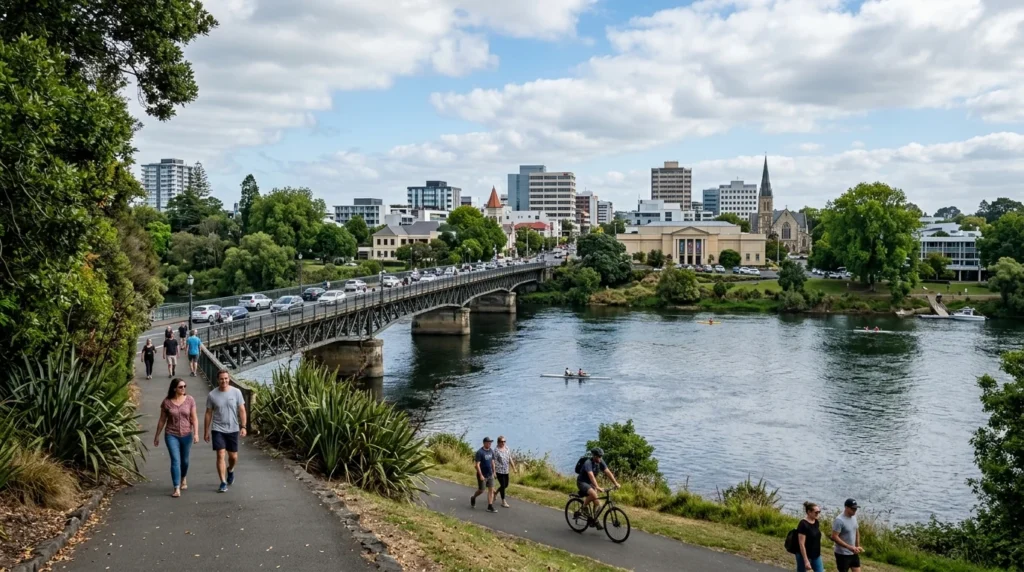
Hamilton features themed gardens at Hamilton Gardens, with plantings representing different garden styles from various civilisations and time periods. The Waikato Museum in the city centre covers local history and Māori heritage, with changing exhibitions of contemporary art.
The region offers opportunities to learn about Māori culture through guided experiences and cultural centres. The Waikato River provides a focus for walking and cycling paths through the city.
Bay of Plenty
Tauranga has grown rapidly as a coastal city. Tauranga Art Gallery presents contemporary visual arts from New Zealand and international artists. The Historic Village preserves buildings and shops from the city’s past, with artisan workshops and cafes operating in the restored structures.
Rotorua combines geothermal activity with Māori cultural experiences. Te Puia operates as both a geothermal park and cultural centre, with traditional carving and weaving demonstrations. The Rotorua Museum building in the Government Gardens is currently closed for earthquake strengthening.
Hawke’s Bay
Napier was rebuilt in Art Deco style following a 1931 earthquake and maintains one of the world’s most cohesive collections of Art Deco architecture. MTG Hawke’s Bay combines museum, gallery and theatre functions in a single facility on the Napier waterfront.
The region is known for wine production, with many cellar doors open for tastings. Some wineries host art exhibitions and cultural events alongside their wine offerings.
Māori Cultural Experiences
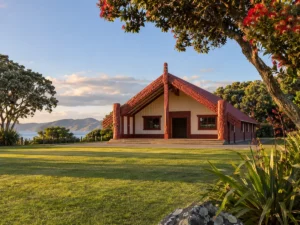
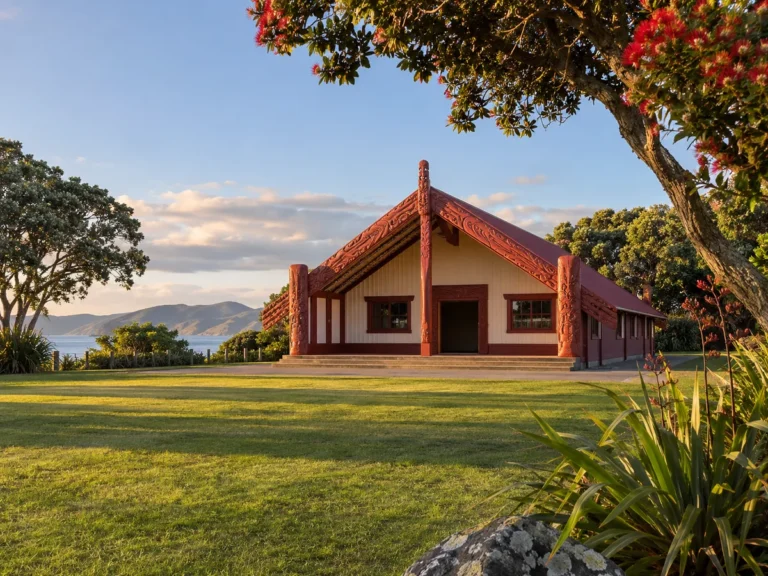
Many museums and cultural centres throughout New Zealand present Māori taonga (treasures) and explain the significance of these objects. Guided tours led by Māori hosts provide insight into tikanga (customs), language and traditions.
Some experiences include performances of waiata (songs), haka and poi, as well as opportunities to learn about traditional crafts like carving and weaving. Visitors to marae (meeting grounds) should follow the guidance of hosts and respect cultural protocols.
Planning Your Visit
Most major museums offer free general entry or free entry for New Zealand residents. Some special exhibitions and guided tours carry charges. Check official websites for current opening hours, as these can vary seasonally.
Public transport operates in larger cities including Auckland, Wellington and Christchurch. Smaller cities are generally walkable, though some attractions may require a car or taxi. Consider booking guided cultural tours in advance, particularly for Māori cultural experiences.
New Zealand observes daylight saving from late September to early April. Most attractions close on Christmas Day. Some reduce hours on other public holidays.
FAQ
Do I need to pay to visit museums and galleries?
Many public museums and galleries offer free general entry or free entry for New Zealand residents. Special exhibitions sometimes require tickets. Check individual institution websites for current pricing.
How much time should I allow for museum visits?
Allow one to two hours for smaller regional museums and galleries. Larger institutions like Te Papa, Auckland Art Gallery and Auckland Museum can easily occupy half a day or more. Plan ahead if you want to join guided tours or see specific exhibitions.
Can I visit cultural attractions with children?
Most museums welcome families and provide activity sheets, discovery areas or hands-on exhibits designed for children. Some offer school holiday programmes. Check accessibility and family facilities on museum websites before visiting.
Sources
- Museum of New Zealand Te Papa Tongarewa
- Auckland Art Gallery Toi o Tāmaki
- Auckland War Memorial Museum
- Canterbury Museum

Independent New Zealand travel guides from 0 Digital, Aotearoa New Zealand. Details change, so check with the operator or the official source before you go. Spotted something out of date? Tell us.
 Culture and heritage
 Culture and heritage
 Culture and heritage
