
New Zealand offers an exceptional range of local attractions across both main islands. National parks protect volcanic peaks and ancient forests. Cities blend modern culture with heritage architecture. Coastal areas provide access to marine wildlife and pristine beaches. The country’s compact size makes it possible to experience mountains, beaches and urban centres within a single trip.
Most attractions are managed by the Department of Conservation or regional councils. Many attractions are free to access, though some sites and facilities charge fees. The government is implementing entry charges for international visitors at selected high-profile sites from 2027.
National Parks and Natural Areas
New Zealand’s 13 national parks are administered by the Department of Conservation. These parks protect diverse landscapes from volcanic plateaus to coastal forests and alpine regions.
Fiordland National Park is a World Heritage Site that includes Milford Sound, Doubtful Sound and Dusky Sound. Milford Sound/Piopiotahi is in the northwest of Fiordland National Park. The park features deep fiords carved by glaciers, with mountains rising directly from the sea. The drive from Te Anau to Milford Sound is 120 kilometres and takes around three hours.
Tongariro National Park in the central North Island is New Zealand’s oldest national park and a dual World Heritage site. The Tongariro Alpine Crossing passes through Tongariro National Park, crossing volcanic terrain between Mangatepōpō and Ketetahi. The track is 19.4 kilometres long and takes seven to eight hours. The route crosses active volcanic landscape with crater lakes, lava flows and alpine vegetation.
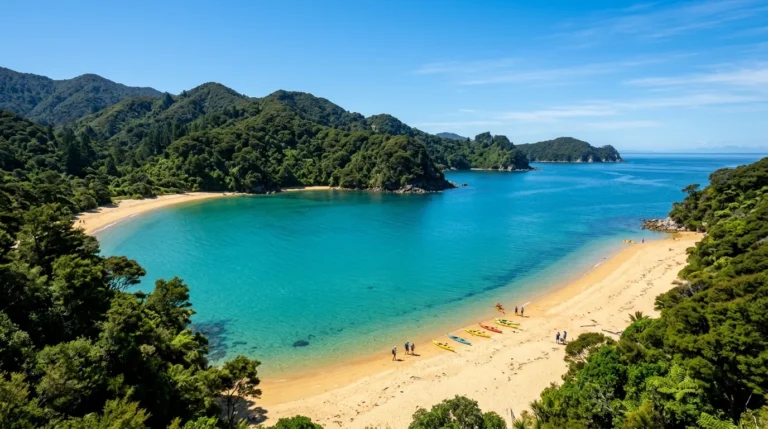
Aoraki/Mount Cook National Park protects the country’s highest peaks in the Southern Alps. Abel Tasman National Park on the northern South Island coast is known for golden sand beaches and coastal forest. The Abel Tasman Coast Track can be walked in sections or over several days.
The government is progressing work to enable international visitors to be charged to visit popular sites including Cathedral Cove, Tongariro Alpine Crossing, Aoraki/Mount Cook and Milford Sound. New Zealanders and ordinary residents will continue to access public conservation land for free.
Hiking and Walking
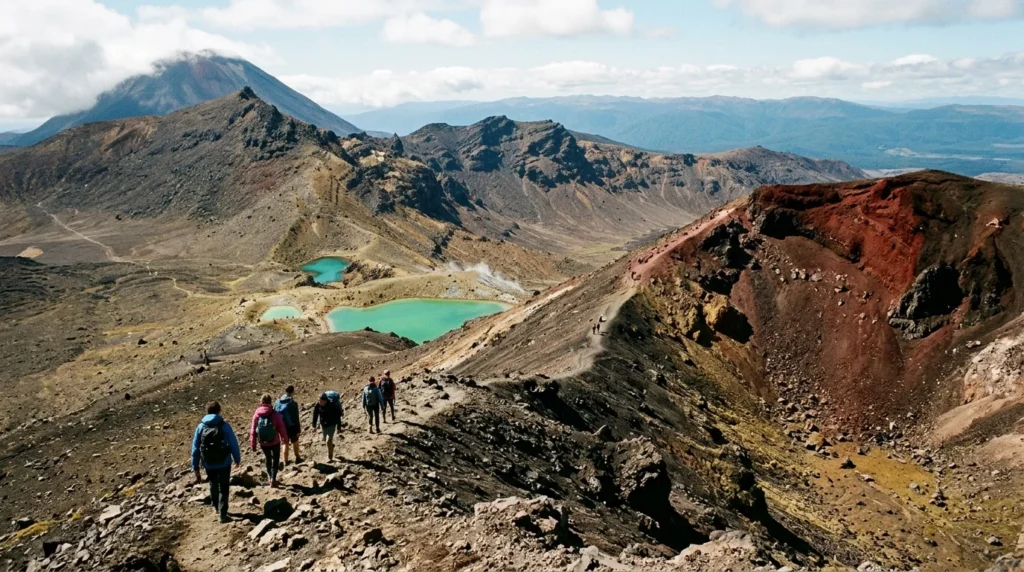
New Zealand’s walking tracks range from short walks to multi-day tramping routes. The Department of Conservation maintains huts and campsites on longer tracks.
The Great Walks are nine premier multi-day tracks. The Milford Track in Fiordland requires advance bookings during summer. The Routeburn Track connects Mount Aspiring and Fiordland national parks. The Heaphy Track on the West Coast crosses from mountains to coast.
Day walks provide access to forests, waterfalls, lakes and viewpoints. Most national parks have networks of shorter tracks suitable for various fitness levels. Coastal walks include the Abel Tasman Coast Track and sections around the Coromandel Peninsula.
Track conditions vary with weather. Mountain tracks can experience snow even in summer. Check conditions with the Department of Conservation before starting. Carry appropriate clothing, food and water. Let someone know your plans.
Find guided walking tours and outdoor activities through operators based near major tracks.
Cities and Urban Attractions
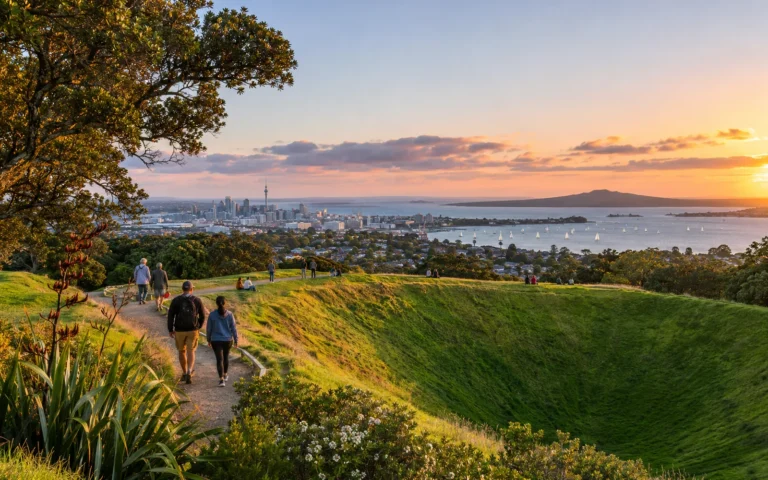
Auckland is New Zealand’s largest city, built across a volcanic field on two harbours. The Sky Tower provides views across the city and surrounding islands. The Auckland Domain includes the Auckland War Memorial Museum. Ferry services connect the city to Waiheke Island and other gulf islands.
Wellington, the capital, sits at the southern tip of the North Island. Te Papa Tongarewa, the national museum, covers New Zealand’s natural environment, history and culture. The Wellington Cable Car connects the central city to the Botanic Garden. The waterfront includes cafes, museums and walkways.
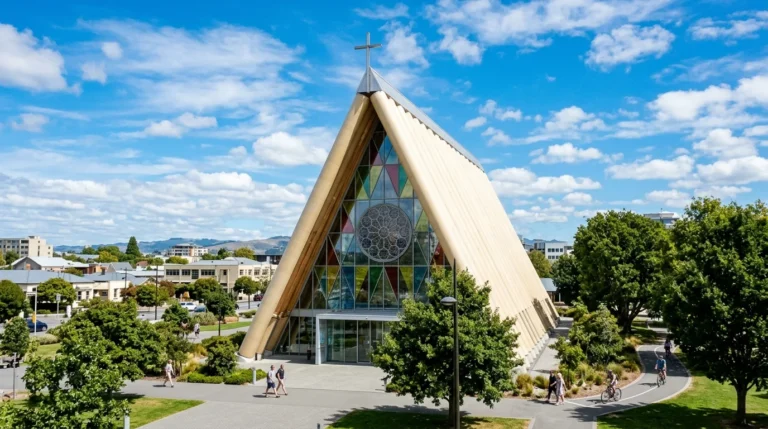
Christchurch in Canterbury has been substantially rebuilt following earthquakes. The Botanic Gardens occupy 21 hectares beside the Avon River. The central city combines heritage buildings with contemporary architecture. Nearby Lyttelton provides harbour access.
Queenstown in Otago sits on Lake Wakatipu surrounded by mountains. The town is a base for activities including skiing, hiking, cycling and water sports. The area includes vineyards and heritage gold-mining sites.
Smaller centres like Nelson, New Plymouth and Napier offer regional attractions, galleries, gardens and local food scenes.
Māori Culture and Heritage
Māori culture is integral to New Zealand’s identity. Cultural experiences include meeting houses, performances, traditional food and art.
Waitangi Treaty Grounds in the Bay of Islands is the site where the Treaty of Waitangi was signed in 1840. The grounds include the Treaty House, a carved meeting house and a ceremonial waka. Guided tours explain the treaty’s significance and ongoing impact.
Rotorua in the Bay of Plenty has several Māori cultural centres. These combine geothermal features with cultural performances, traditional arts and hāngī meals. Te Puia includes the New Zealand Māori Arts and Crafts Institute where visitors can see carving and weaving.
Museums throughout the country hold taonga (treasures) and explain Māori history. Te Papa in Wellington has extensive Māori collections and contemporary exhibitions. Regional museums in areas like Tairāwhiti Gisborne and Taranaki tell local iwi stories.
Explore cultural experiences and heritage sites or find unique cultural activities across New Zealand.
Wildlife and Conservation
New Zealand’s native wildlife evolved in isolation, resulting in unique species. Many are nocturnal, flightless or found nowhere else.
The kiwi is New Zealand’s national bird. These flightless, nocturnal birds are rarely seen in the wild. Sanctuaries and wildlife parks provide opportunities to see kiwi in controlled environments. Some locations offer night tours when kiwi are active.
Coastal areas support populations of seals, sea lions and penguins. The Otago Peninsula near Dunedin has yellow-eyed penguins, fur seals and an albatross colony. Visitors can observe from designated viewing areas.
Kaikōura on the South Island’s east coast is known for whale watching. Sperm whales are present year-round. Dolphins, seals and seasonal species also visit the area. Tours operate by boat and small plane.
Zealandia in Wellington is a fenced ecosanctuary restoring native forest and birdlife. The reserve has takahē, kākā, tūī and other native birds. Walking tracks let visitors explore at their own pace.
The Department of Conservation manages wildlife refuges, marine reserves and island sanctuaries. Some require permits or have restricted access to protect vulnerable species. Learn more about eco-friendly wildlife experiences.
Adventure Activities
New Zealand markets itself heavily on adventure tourism. Activities range from gentle to extreme across mountains, rivers, lakes and coastline.
Queenstown is known as the adventure capital. Bungee jumping was commercialised here in the 1980s. Multiple locations offer jumps of varying heights. Other activities include jet boating, skydiving, paragliding and canyon swinging.
White-water rafting operates on rivers throughout the country. Rotorua, Taupō and the West Coast have commercial rafting. Grades range from gentle floats to grade five rapids.
Skiing and snowboarding run from June to October. The South Island has club fields and commercial ski areas around Queenstown, Wānaka and Mount Cook. The North Island has fields on Mount Ruapehu. Find details on skiing and snowboarding.
Water activities include kayaking, surfing, diving and sailing. Abel Tasman and the Marlborough Sounds are popular for sea kayaking. Raglan on the west coast and Taranaki have consistent surf. The Poor Knights Islands off Northland are a top diving location.
Browse activities and adventure operators or read about outdoor adventures.
Coastal Attractions and Beaches
New Zealand has 15,000 kilometres of coastline with varied beaches, harbours and marine reserves.
The Coromandel Peninsula east of Auckland has sheltered east coast beaches and rugged west coast surf beaches. Cathedral Cove features a natural rock arch accessible by walking track or water taxi. Hot Water Beach lets visitors dig pools in the sand during low tide when geothermal water surfaces.
The Bay of Islands in Northland includes 144 islands in a sheltered harbour. Water activities include sailing, dolphin watching and fishing. Historic Russell was New Zealand’s first capital.
The Abel Tasman Coast Track follows golden sand beaches and coastal forest. Water taxis provide access to different sections, allowing walks of varying length.
The Catlins on the southern coast have dramatic cliffs, rainforest and waterfalls. Wildlife includes sea lions, penguins and dolphins. The area is less developed than northern beaches.
Marlborough Sounds at the top of the South Island consist of drowned river valleys creating sheltered waterways. The area is accessed by boat or walking tracks.
Food and Wine
New Zealand’s food scene uses local ingredients including lamb, seafood, vegetables and fruit. Cities have diverse restaurants while regional areas often focus on local produce.
Wine regions produce internationally recognised varieties. Marlborough is known for sauvignon blanc. Hawke’s Bay and Waikato produce red wines. Central Otago grows pinot noir. Waiheke Island near Auckland has boutique vineyards. Most regions offer cellar door tastings and vineyard restaurants. Learn about New Zealand food and wine.
Farmers markets operate in most centres, usually weekly. These sell local produce, baked goods, preserves and prepared food.
Coastal towns serve fresh seafood. Green-lipped mussels, oysters, crayfish and various fish are common on menus. Fish and chip shops are widespread.
Find restaurants, wineries and food experiences or plan a foodie road trip.
Practical Information
Most attractions are accessible year-round though some have seasonal closures or reduced winter access. Mountain roads can close for snow. Alpine huts and some coastal tracks operate on seasonal booking systems.
The Department of Conservation website has current information on track conditions, hut bookings and park alerts. Regional tourism organisations provide local information. i-SITE visitor centres operate in most towns.
Getting around requires a vehicle in most areas outside main cities. Public transport is limited between centres. Rental vehicles, campervans and tour buses are main options. Read about transport options or find vehicle hire and transport services.
Accommodation ranges from campsites and hostels to luxury lodges. Book ahead in peak season (December to February). Consider places to stay near the attractions you plan to visit.
Weather is changeable, particularly in mountain areas. Carry layers, waterproof clothing and sun protection. Sandflies are common near water and bush. Apply insect repellent.
FAQ
Do I need to pay to enter national parks?
Currently most national parks are free to enter. The government plans to introduce entry fees for international visitors at selected high-profile sites including Milford Sound, Aoraki/Mount Cook, Tongariro Alpine Crossing and Cathedral Cove. These charges are expected to begin in 2027. Some facilities like huts and campsites already charge fees. New Zealand residents will continue to access these areas for free.
What is the best time to visit?
Summer (December to February) has the warmest weather and longest days but is the busiest season. Autumn (March to May) offers mild weather with fewer visitors. Winter (June to August) is quieter and best for skiing but some roads and tracks close. Spring (September to November) has variable weather but good conditions for walking. Consider your interests when planning.
How long do I need?
Two weeks allows time to see highlights in one island. Three to four weeks lets you explore both main islands without rushing. Longer stays allow for tramping, staying in smaller places and experiencing local life beyond major attractions. The country is more spread out than it appears on maps.
Sources
- Tourism New Zealand official website
- Department of Conservation
- DOC international visitor access charges information

Independent New Zealand travel guides from 0 Digital, Aotearoa New Zealand. Details change, so check with the operator or the official source before you go. Spotted something out of date? Tell us.
 Attractions
 Attractions
 Attractions
