
New Zealand is one of the safest and most straightforward countries for solo travel. You can explore independently with confidence, meet other travellers easily in hostels and on tours, and navigate both cities and remote areas without difficulty. The country has excellent infrastructure, English is spoken everywhere, and locals are helpful.
Solo travellers are common throughout New Zealand. You will find it easy to eat alone in cafes and restaurants, join group activities, or simply enjoy your own company in some of the most dramatic landscapes on the planet.
Why Travel Solo in New Zealand
New Zealand consistently ranks among the safest countries in the world, with low crime rates and a strong rule of law and community-oriented culture. The country is particularly safe for solo female travellers.
The main risks are environmental rather than criminal. Roads can be winding and unfamiliar, beaches may have strong rip currents, and weather in the mountains changes quickly. Standard precautions apply: do not leave items visible in rental cars at trailheads, use well-lit areas at night in cities, and trust your instincts.
New Zealand has diverse landscapes within short distances. You can hike through native forest, soak in hot springs, explore glaciers, visit vineyards and relax on beaches without covering vast distances. The compact geography suits solo travellers who want variety without complex logistics.
Transport is reliable and backpacker infrastructure is well developed. You will meet other solo travellers in hostels, on buses, and on popular walks. Many operators run small group tours that suit people travelling alone.
Visa and Entry Requirements
Most travellers must have a visa or a New Zealand Electronic Travel Authority (NZeTA) before travelling to New Zealand. New Zealand and Australian citizens do not need a visa or NZeTA.
The Visa Waiver Programme permits citizens of some countries to enter New Zealand for up to three months without a visa, but they need to complete an NZeTA. Travellers from other countries must apply for a Visitor Visa before flying.
You must hold a passport valid for at least three months beyond the date you plan to leave New Zealand. Check the Immigration New Zealand website for your specific requirements.
Getting Around
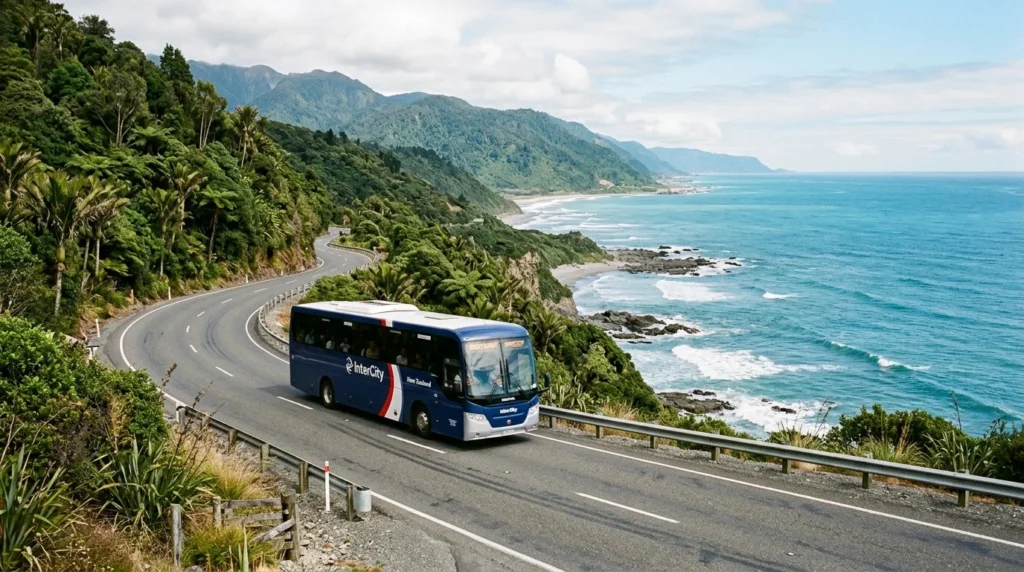
Buses are the main form of public transport in New Zealand, with InterCity operating regular daily services throughout the country. InterCity operates New Zealand’s national bus network with over 100 daily services to more than 600 towns and cities.
InterCity offers two types of bus pass: FlexiPass provides an hours-based pass giving access to the entire national network, while TravelPass offers fixed itinerary passes based on popular touring routes. Coaches have free Wi-Fi and air-conditioning.
Renting a car gives you flexibility to explore at your own pace. Drive on the left side of the road. Distances are shorter than they appear on the map because roads are winding and you will want to stop frequently for views. Plan no more than three hours of driving per day and avoid driving at dusk or after dark in rural areas where animals may be on the road.
Major cities have local bus and train networks. Auckland and Wellington both have comprehensive public transport systems.
Where to Stay
Hostels are the easiest way to meet other travellers. YHA operates hostels throughout New Zealand with dormitory and private room options. Most hostels have communal kitchens, lounges and organised activities. Many offer rides to popular attractions or help arrange activities.
Motels are common and affordable. They typically offer self-contained units with cooking facilities, making them practical for solo travellers who want privacy and the option to prepare their own meals.
Holiday parks have cabins, powered sites for campervans, and tent sites. They suit solo travellers on a budget and often have good facilities including kitchens, lounges and hot pools.
Book accommodation in advance during peak season from December to February and during school holidays. Outside these periods you can often find rooms with short notice.
Browse places to stay across New Zealand.
Staying Safe
The New Zealand emergency number for Police, Fire or Ambulance services is 111. Calling 111 from your mobile is free even if the phone is out of credit. For non-urgent police matters, call 105.
Keep your belongings secure and be aware of your surroundings. In cities, watch for petty theft and pickpocketing in busy areas. At beaches and trailheads, do not leave valuables visible in your vehicle.
Water safety is important. Never swim alone, and always check local conditions and lifeguard advice. Swim between the flags at patrolled beaches. Many beaches have strong rip currents.
In the outdoors, check weather forecasts before hiking, tell someone your plans, and carry appropriate clothing and equipment. Weather in the mountains can change rapidly. The Department of Conservation website has detailed information on tracks and conditions.
Get comprehensive travel insurance that covers outdoor activities, medical treatment and theft.
Meeting People
Hostels are natural places to meet other solo travellers. Join cooking sessions in communal kitchens, sit in common areas, or participate in organised events. Many hostels arrange group outings to local attractions.
Group tours and activities make it easy to connect with others while experiencing New Zealand’s highlights. Day tours, multi-day hikes, adventure activities and food tours all attract solo travellers. Operators running trips to Milford Sound, the Tongariro Alpine Crossing, Abel Tasman National Park and similar destinations cater well to individuals.
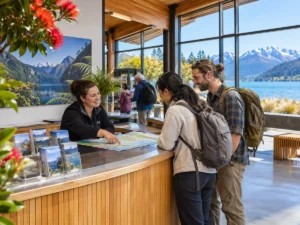
Local events and festivals provide opportunities to meet both travellers and locals. Farmers’ markets, community gatherings and cultural performances create relaxed environments for conversation. Check regional tourism websites and i-SITE visitor information centres for current events.
Eating alone is unremarkable in New Zealand. Cafes and casual restaurants seat solo diners without fuss. Counter seating at some establishments makes it easy to chat with staff or other customers.
Regions to Explore
Northland
Beaches, the Bay of Islands, giant kauri trees and Māori heritage sites. The far north is warm and relaxed.
Auckland
New Zealand’s largest city has museums, volcanic cones, harbours, islands and a strong cafe culture. Good base for day trips.
Bay of Plenty
Rotorua has geothermal activity and Māori culture. Tauranga and Mount Maunganui offer beaches and coastal walks.
Wellington
The compact capital has Te Papa museum, a thriving arts scene, excellent cafes and restaurants, and harbour walks.
Nelson and Tasman
Abel Tasman National Park has golden beaches and coastal tracks. Nelson is sunny with galleries, markets and craft breweries.
Canterbury
Christchurch is rebuilding with innovative architecture. Aoraki/Mount Cook National Park has glaciers and alpine walks.
Otago
Queenstown offers adventure activities, lake views and mountain scenery. Dunedin has Scottish heritage and wildlife. Central Otago has wineries and historic gold mining towns.
When to Visit
Summer from December to February is peak season with warm weather ideal for beaches, hiking and outdoor activities. Accommodation books out and popular spots are busy. This is the best time for the Abel Tasman Coast Track, swimming and coastal activities.
Autumn from March to May brings cooler temperatures, fewer crowds and autumn colours. Wine regions celebrate harvest. This is an excellent time to travel if you want to avoid peak season prices.
Winter from June to August is skiing season in Queenstown, Wānaka and the central North Island. Snow closes some mountain passes. The South Island can be very cold but also beautifully clear.
Spring from September to November has mild weather, blooming flowers and lambs in the fields. Some tracks may still be affected by winter snow at higher altitudes.
Weather varies significantly by region. Northland and the Bay of Islands are warmer year-round. The West Coast of the South Island is wetter. Alpine areas can have snow even in summer.
Practical Tips
Buy a local SIM card for mobile data. Coverage is good in towns and cities but patchy in remote areas. Download offline maps before heading into the backcountry.
New Zealand uses 230V power with Type I plugs. Bring an adapter if your devices use different plugs.
Tap water is safe to drink throughout the country. Carry a reusable water bottle.
Tipping is not expected in New Zealand. Service charges are included in prices.
Shops typically open from 9am to 5pm or 6pm on weekdays, with shorter hours on weekends. Supermarkets in larger towns often stay open until 9pm or 10pm.
Budget carefully. New Zealand is relatively expensive. Cooking your own meals, staying in hostels, and using bus passes help reduce costs.
For more ideas on what to do, browse activities and adventure, tours and sightseeing, and culture and heritage listings.
FAQ
Do I need a visa to visit New Zealand?
Most visitors need either a Visitor Visa or an NZeTA depending on their nationality. Citizens of visa waiver countries can enter for up to three months with an NZeTA. Check Immigration New Zealand’s website for your specific requirements. Australian and New Zealand citizens do not need a visa or NZeTA.
How much does it cost to travel solo in New Zealand?
Budget travellers staying in hostels, cooking their own meals and using buses can expect to spend around NZD 80 to 120 per day. Mid-range travellers using motels, eating out occasionally and renting a car will spend NZD 150 to 250 per day. Costs are higher in Queenstown and other popular tourist destinations.
Is it easy to meet other travellers?
Yes. Hostels have communal areas where solo travellers naturally connect. Group tours, popular hikes like the Tongariro Alpine Crossing, and adventure activities attract individuals travelling alone. The backpacker trail is well established and you will encounter the same people multiple times as you travel similar routes.
Sources
- Tourism New Zealand: Visa and Entry Requirements
- Immigration New Zealand
- InterCity New Zealand
- Tourism New Zealand: Emergency Information

Independent New Zealand travel guides from 0 Digital, Aotearoa New Zealand. Details change, so check with the operator or the official source before you go. Spotted something out of date? Tell us.
 Trip planning
 Trip planning
 Trip planning
