
New Zealand offers several ways to combine water-based travel with Māori cultural experiences. You can take scenic cruises through fiords and on lakes where guides share Māori stories and place names, visit historic sites like Waitangi as a shore excursion from cruise ships, or join land-based cultural experiences in places like Rotorua before or after coastal travel. This guide covers the practical options.
Understanding Māori heritage in New Zealand
Māori are the tangata whenua (first people) of Aotearoa New Zealand, with connections to the land and waterways that stretch back over 1,000 years. Many natural features have Māori names and stories attached to them. Te Papa Tongarewa in Wellington provides context for Māori history and contemporary culture.
Te Puia and Whakarewarewa Village in Rotorua offer geothermal wonders and traditional carving schools. The Waitangi Treaty Grounds in the Bay of Islands provide insight into New Zealand’s founding document, signed in 1840 between Māori chiefs and the British Crown. The treaty remains central to New Zealand’s identity and ongoing relationship between Māori and non-Māori.
Scenic cruises with Māori cultural context
Several scenic cruises in New Zealand include Māori stories and place names as part of the commentary.
Milford Sound and Doubtful Sound
The Māori name for Milford Sound is Piopiotahi. According to Māori legend, the god Tu-te-raki-whanoa carved the fiords with his adze, creating safe harbours. Some Milford Sound cruises include Māori narratives as part of their onboard commentary.
Doubtful Sound’s Māori name is Patea, meaning place of silence. In Māori legend, Doubtful Sound and other fiords were created by Tu Te Raki Whanoa who split the rock allowing the sea to pour in. Both sounds are in Fiordland National Park in Southland. Operators include RealNZ and other licensed companies.
Lake Taupō Māori rock carving cruises
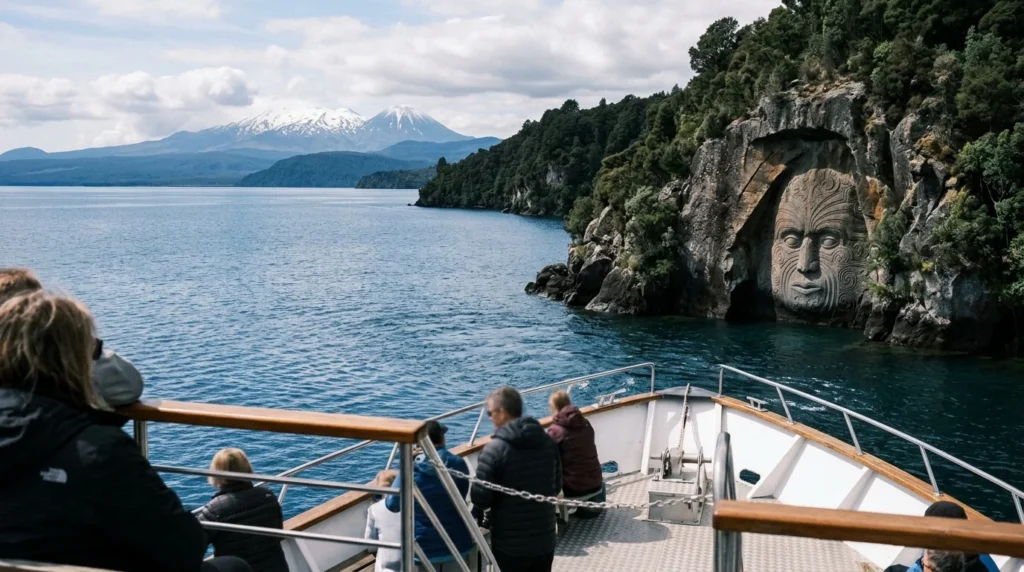
Lake Taupō cruises visit the Māori rock carvings at Mine Bay. Local guides share the stories behind the 14-metre carvings. A 90-minute catamaran cruise includes viewing the Ngātoroirangi Māori rock carvings. Several operators run these trips from Taupō in the Waikato region.
Bay of Islands
The Bay of Islands in Northland has 144 islands and significant Māori and colonial history. Tours from Auckland to the Bay of Islands often combine a Hole in the Rock cruise with discovering the 144 islands. Many trips include time at Waitangi.
Shore excursions from cruise ships
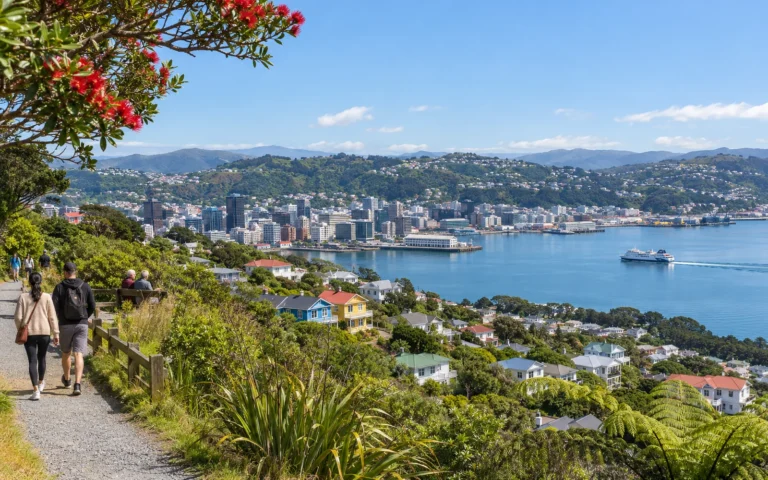
International cruise ships visiting New Zealand ports offer shore excursions to cultural sites. Common stops include Auckland, Tauranga, Wellington and other harbours around both islands.
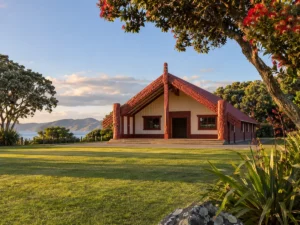
Shore excursions from Tauranga often include Te Puia entry, geothermal sights, a Māori cultural performance and hāngī buffet lunch in Rotorua. Some cruise lines offer marae visits as shore excursions. A marae is a communal meeting ground central to Māori communities.
During the 2023-24 cruise season, around 350,000 passengers sailed to New Zealand. Peak season runs from October to April. Check our guide to New Zealand’s cruise experience for more details.
Waitangi Treaty Grounds
The Waitangi Treaty Grounds offer guided tours and cultural performances that bring Māori heritage and the nation’s founding story to life. Entry includes access to the grounds, a one-hour guided experience, and cultural performance. The site is in Paihia in the Bay of Islands.
You can visit independently or as part of a tour from Auckland. Two-day tours from Auckland typically combine the Bay of Islands cruise with Waitangi. See our Auckland day trips guide for options.
Rotorua Māori cultural experiences
Rotorua is the best place in New Zealand for travellers to get an introduction to Māori culture. Rotorua has a genuine concentration of iwi and hapū-run cultural institutions, several of which have operated continuously for well over a century.
Three major operators specialise in cultural performances: Te Pa Tū, Mitai Māori Village and Te Puia. Cultural shows typically include kapa haka (traditional song and dance) and may include hāngī (earth oven banquet).
Whakarewarewa Living Māori Village in Rotorua offers an authentic experience of Māori daily life. Rotorua is inland in the Bay of Plenty region, about three hours by road from Auckland or Tauranga.
Māori cultural etiquette for visitors
If you enter a marae, expect to be greeted with a pōwhiri and the traditional hongi welcome, which involves touching noses. Manaakitanga expresses the art of hosting visitors at the heart of Māori culture.
Listen to your guide’s instructions during formal welcomes. Remove shoes when entering wharenui (meeting houses). Ask permission before taking photographs, especially during ceremonies or in sacred spaces. Show respect for taonga (treasures) and cultural practices you encounter.
Cities and towns in Aotearoa are increasingly referred to by their Māori names. Learning a few basic greetings like “kia ora” (hello) is appreciated.
When to visit
New Zealand’s main tourism and cruise season runs from October to April, with the warmest weather from December to February. Rotorua and other land-based cultural experiences operate year-round. Milford Sound and Doubtful Sound cruises run daily but can be affected by weather, particularly in winter.
Some cultural performances book out weeks ahead during peak summer months. Reserve accommodation and experiences early if travelling between December and March. Our guide to winter in New Zealand covers the quieter season.
Getting around
Most international cruises dock in Auckland, Wellington, Christchurch, Dunedin or smaller ports. Organised tours collect passengers from the wharf for shore excursions. Book through your cruise line or directly with local operators.
If travelling independently, you can hire a car or use coach services to reach Rotorua, Waitangi or other cultural sites. Distances are significant. Auckland to Rotorua is about three hours. Auckland to Paihia in the Bay of Islands is about three and a half hours. See our transport options for car hire and shuttle services.
Lake Taupō is between Auckland and Wellington on State Highway 1. Milford Sound is about four hours from Queenstown in Otago. Doubtful Sound requires a boat across Lake Manapouri and a coach transfer.
Sustainable and respectful tourism
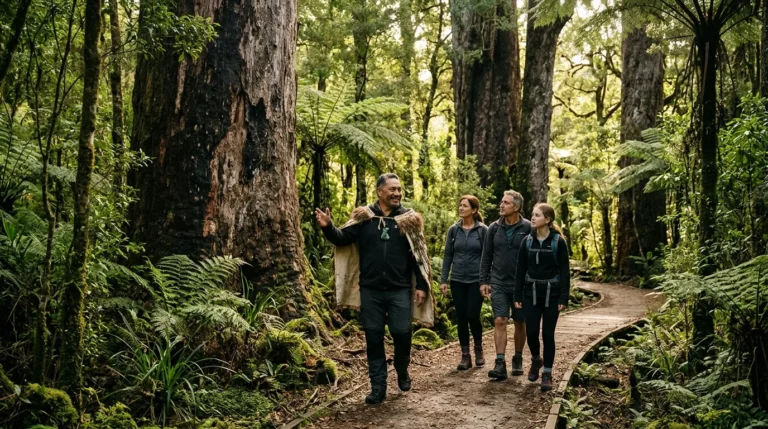
Māori operators in Rotorua emphasise sustainability and genuine cultural exchange, with careful stewardship of land and resources and benefits shared within Māori communities. Choose operators that work directly with iwi (tribes) and support local communities.
Follow the Tiaki Promise, New Zealand’s commitment to care for people, place and culture. Pack out all rubbish. Stay on marked tracks. Respect tapu (sacred) sites. Our sustainable tourism guide has more detail.
FAQ
Do I need to book cultural experiences in advance?
Yes, particularly in summer. Popular experiences like Te Puia, Mitai Māori Village and Te Pa Tū fill up quickly. Shore excursions from cruise ships can be booked through your cruise line or directly with operators, but spaces are limited.
What should I wear to a cultural performance?
Casual, comfortable clothing is fine. Some evening experiences include outdoor sections, so bring a jacket. You may be asked to remove shoes when entering meeting houses. If participating in a pōwhiri, follow your guide’s instructions about appropriate behaviour and dress.
Can I visit cultural sites independently or do I need a tour?
Major sites like Te Puia, Waitangi Treaty Grounds and Whakarewarewa Village welcome independent visitors. Entry includes guided tours at most locations. Some marae visits and more intimate cultural experiences require advance arrangement and are only available through organised tours. For cruise ship passengers on a tight schedule, organised shore excursions are more practical.
Sources
- Tourism New Zealand: Māori Cultural Tours
- RealNZ: Milford Sound Premium Cruises
- Department of Conservation New Zealand

Independent New Zealand travel guides from 0 Digital, Aotearoa New Zealand. Details change, so check with the operator or the official source before you go. Spotted something out of date? Tell us.
 Culture and heritage
 Culture and heritage
