
Cruising offers a practical way to see New Zealand’s coastline, from subtropical harbours in the north to the dramatic fjords of the south. The main cruise season runs from October to April, with a smaller winter season from April to July. More than 25 different ships visit New Zealand’s coast in a typical year, calling at ports on both islands.
Most cruises either start or finish in Auckland, the main hub for cruise ships to New Zealand, or operate as part of trans-Pacific voyages or round trips from Australian ports including Sydney, Melbourne or Brisbane. You can expect to spend between six and ten hours in most ports, enough time to explore independently or join organised shore excursions.
When to Cruise
New Zealand’s summer months are December, January and February, and most cruise itineraries occur during these months. The weather is warmer and days are longer, but ports are busier and ships fuller. Expect higher demand around the Christmas and New Year period when school holidays overlap in both Australia and New Zealand.
The shoulder months of October, November, March and April offer milder weather with fewer crowds. Some travellers prefer these quieter periods despite slightly cooler temperatures.
Auckland and the North Island
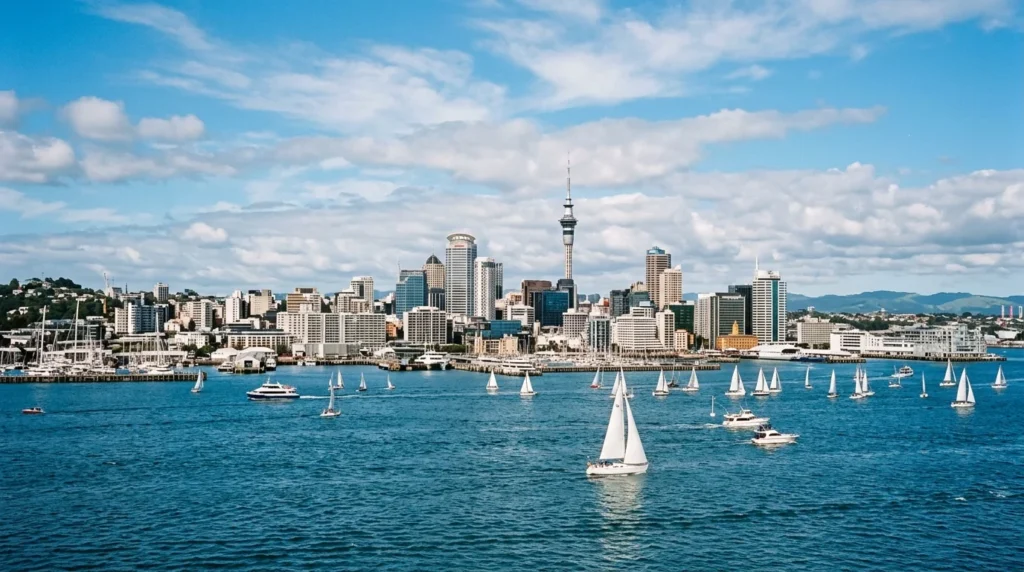
Stops on cruises around the North Island may include the Bay of Islands, Auckland and Wellington. Auckland and Wellington are highly walkable, with many attractions located within a short distance of the cruise terminal.
The Bay of Islands, roughly 150 kilometres north of Auckland, is known for its sheltered waters and maritime history. The town of Russell preserves parts of New Zealand’s colonial past.
Napier in the Hawke’s Bay wine region is known for its art deco architecture. Tauranga serves as the gateway to Rotorua, where you can see geothermal features including geysers, hot springs and bubbling mud pools, as well as experience Māori culture through performances and traditional food preparation.
Wellington, the capital, sits on a compact harbour. The city offers arts, culture and natural beauty, with attractions like Te Papa Tongarewa, the national museum. The waterfront is an easy walk from where ships dock.
South Island Ports
Cruise destinations around the South Island can include the Marlborough Sounds, Akaroa and Christchurch. Akaroa, a harbour town on Banks Peninsula near Christchurch, reflects its French colonial heritage. The harbour is home to Hector’s dolphins, the world’s smallest dolphin species.
Ships calling at Lyttelton provide access to Christchurch. The city has botanical gardens, museums and galleries. Picton sits at the head of Queen Charlotte Sound in the Marlborough region, known for its wine production and the sheltered waterways of the Marlborough Sounds.
Dunedin shows Scottish influence in its architecture and place names. Ships dock at Port Chalmers, a short distance from the city centre. The Otago Peninsula near Dunedin is known for wildlife including albatross and penguins.
Fiordland and Milford Sound
Many New Zealand cruise itineraries include scenic cruising through Fiordland National Park. Ships may cruise through Milford Sound, Doubtful Sound or Dusky Sound, where steep forested cliffs rise directly from the water. Waterfalls cascade hundreds of metres down the rock faces, particularly after rain.
Wildlife in the sounds includes New Zealand fur seals, bottlenose dolphins and Fiordland crested penguins. Milford Sound is the most visited of the fjords, accessible by road as well as by sea. The dramatic peak of Mitre Peak rises more than 1,600 metres above the water.
Some cruise lines also offer overnight cruises within the sounds themselves, departing from Milford Sound. These smaller vessels allow closer access to waterfalls and wildlife.
Types of Cruises
Ocean cruises on larger ships make up the majority of New Zealand cruise options. Itineraries typically run between seven and 14 days, combining New Zealand ports with stops in Australia or Pacific islands. Major international cruise lines operate in New Zealand waters during the summer season.
Expedition cruises use smaller ships to reach more remote areas. These focus on wildlife and nature, with itineraries that may include the subantarctic islands or extended time in Fiordland. Onboard naturalists provide commentary and guide excursions including kayaking and hiking.
Round-the-world cruise itineraries include New Zealand as one segment of much longer voyages. These ships typically spend one to two weeks visiting New Zealand ports before continuing to other regions.
Shore Activities
Shore excursions vary by port. Adventure options include hiking, kayaking, jet boating and wildlife tours. Cultural experiences might include visits to marae (Māori meeting grounds), traditional performances or learning about local history. Food and wine tours operate in regions including Hawke’s Bay and Marlborough.
Many cruise passengers in Tauranga take excursions to Rotorua to see geothermal activity and Māori cultural sites. From Dunedin, popular trips visit the Otago Peninsula for wildlife viewing or tour historic buildings in the city. In Wellington, Te Papa museum is within walking distance of the port and offers free entry.
You can explore independently in most ports. Auckland and Wellington have city centres close to where ships dock. Smaller ports like Picton and Akaroa are compact and walkable. Check how far your ship berths from the town centre, as some ports require shuttle buses.
Planning Your Cruise
When choosing an itinerary, consider whether you want to focus on one island or see both. North Island itineraries emphasise cities, Māori culture and geothermal areas. South Island cruises feature dramatic landscapes, wildlife and wine regions. Many cruises combine both islands with scenic cruising through Fiordland.
Check visa requirements well ahead of travel. Requirements vary by nationality and length of stay. Visit the Immigration New Zealand website for current information about entry requirements and any electronic travel authority needed.
Travel insurance is recommended. Look for policies that cover cruise-specific situations including missed ports due to weather, medical care and trip cancellations. Some policies exclude certain adventure activities, so read the terms if you plan activities like bungy jumping or helicopter flights.
Pack layers as New Zealand weather can change quickly. Bring waterproof clothing, comfortable walking shoes and sun protection. If you plan to hike or do outdoor activities during shore excursions, sturdy footwear is essential. Some cruise lines have formal nights requiring dressier clothing. For more guidance, see our packing tips for New Zealand seasons.
Environmental Considerations
Fiordland’s fjords are part of a World Heritage area with fragile ecosystems. Cruise ships operating in these waters follow guidelines to minimise environmental impact. Some operators have reduced single-use plastics onboard and improved waste management systems.
When going ashore, follow Leave No Trace principles. Stay on formed tracks, take all rubbish with you and keep a respectful distance from wildlife. New Zealand has no native land mammals, so introduced pests pose a serious threat to native birds and plants. Help protect these ecosystems by cleaning boots before walks and not bringing food into conservation areas.
New Zealand’s marine reserves protect underwater habitats. If you snorkel or kayak in these areas, do not touch or remove anything. Marine life including dolphins and seals are protected by law. Keep a safe distance and never feed or attempt to touch wild animals.
FAQ
Do I need a visa to cruise to New Zealand?
Visa requirements depend on your nationality and how long you plan to stay. Many visitors can enter New Zealand without a visa for short stays, but may need to apply for an electronic travel authority. Check the Immigration New Zealand website for current requirements specific to your country.
Can I explore ports without booking a shore excursion?
Yes, many New Zealand cruise ports are easy to explore independently. Auckland and Wellington have walkable waterfronts and city centres close to where ships dock. Smaller ports like Akaroa and Picton are compact. Check the distance from your berth to the town, as some ports require shuttle transport. Make sure you understand your ship’s departure time and allow time to get back onboard.
What is the weather like during cruise season?
October to April covers spring, summer and autumn in New Zealand. Summer months of December to February bring the warmest weather, typically 16 to 24 degrees Celsius, but also the most rain in some areas. Fiordland receives high rainfall year-round. Weather can change quickly, so pack layers and waterproof clothing regardless of the forecast. The shoulder months of October, November, March and April offer mild temperatures with less humidity.
Sources
- Tourism New Zealand: Cruise ships that visit New Zealand
- Tourism New Zealand: Cruise to New Zealand
- Immigration New Zealand

Independent New Zealand travel guides from 0 Digital, Aotearoa New Zealand. Details change, so check with the operator or the official source before you go. Spotted something out of date? Tell us.
 Trip planning
 Trip planning
